
Terrebonne Parish Criminal Court Files
A criminal court record is the file opened and maintained by the court once charges are filed. In Terrebonne Parish, the 32nd Judicial District Court is the main trial court for state criminal matters, and the Terrebonne Parish Clerk of Court is the custodian for district-court filings, docket entries, minutes, judgments, and certified copies. City Court of Houma can handle city-level misdemeanor and traffic matters within its jurisdiction, so the first question is always venue.
The Terrebonne Parish District Attorney for the 32nd Judicial District screens charges, files or declines bills of information, manages prosecution, and handles traffic-payment instructions for eligible matters. The official DA site identifies Honorable Joseph L. Waitz, Jr. as District Attorney and lists a mailing address of P.O. Box 3600, Houma, LA 70361-3600. Public defender services route through Louisiana Office of State Public Defender District 32, with District Defender Tony Champagne listed for Terrebonne Parish.
Search Terrebonne Parish Criminal Court Records
The main local route is the Terrebonne Parish Clerk of Court Public Records Search. It is an eSearch account and subscription portal, so full indexed search or document images may require sign-in and paid access. The sign-in page lists browser requirements and a no-refund notice for subscriptions and copies. If a defendant name search is not enough, use the criminal case number, bill number, docket number, hearing date, or full name with date of birth when the official custodian asks for it.
- Confirm whether the case is in 32nd Judicial District Court, City Court of Houma, another lower court, or a federal court.
- Search the Clerk route for 32nd JDC criminal court records when charges have been filed in district court.
- Read the docket entries before relying on a charge, because amendments, dismissals, pleas, and sentencing can change the case meaning.
- Request copies from the Clerk when the online result does not show the document image or when a certified copy is needed.
- Use TPSO only for booking, jail, or warrant data, and use the DA or Public Defender for prosecution or appointed-counsel context.
For charge-specific research before or after arrest, the Terrebonne Parish arrest records and court charges page separates booking information, filed charges, and later case outcomes.
Terrebonne Parish Criminal Court Flow
Criminal records make the most sense when read by stage. A charge can begin with arrest or citation data, then move through DA screening, formal filing, arraignment, pretrial motions, plea negotiations, trial settings, disposition, and sentencing. Each step can create a docket entry or filed document. The court file is the best place to confirm what was filed and how the case ended.
Case flow: Charges Filed › Arraignment › Pretrial / Motions › Plea or Trial › Disposition › Sentencing
| Stage | What Happens |
|---|---|
| Charges filed | The DA files a bill of information or an indictment appears after grand-jury action when used. |
| Arraignment | The defendant is formally advised of charges and enters a plea such as guilty or not guilty. |
| Pretrial and motions | The record may show bond settings, continuances, subpoenas, discovery issues, motions, and orders. |
| Plea or trial | The case may resolve by plea, trial verdict, dismissal, acquittal, or another disposition. |
| Sentencing | The court enters jail or prison time, probation, fines, costs, restitution, or other sentence terms when applicable. |
The Louisiana criminal expungement statute index is assigned to this page. The Louisiana Code of Criminal Procedure expungement articles are important after a case reaches a qualifying outcome.
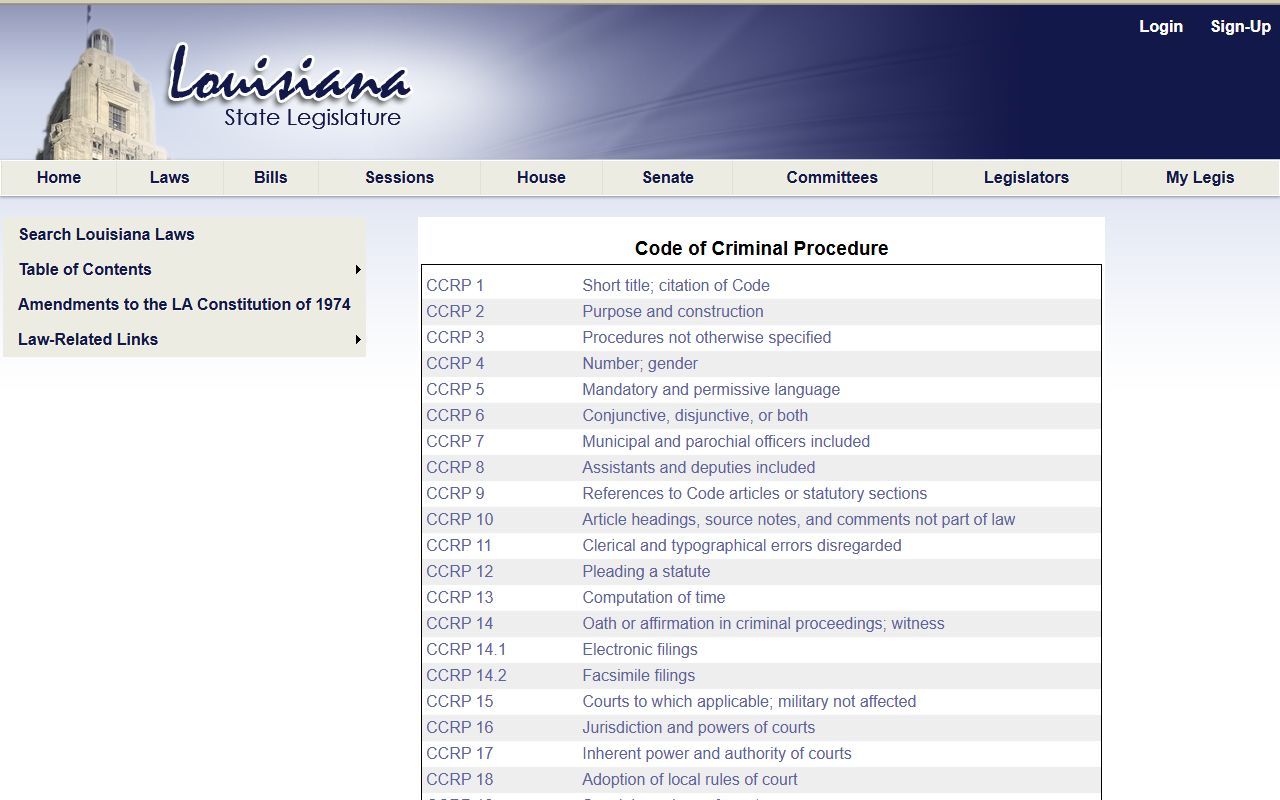
Expungement rules affect public access after the case, but they do not erase the need to read the original charge, disposition, and sentence correctly.
Terrebonne Parish Criminal Court Fields
A Terrebonne Parish criminal court record can include several layers of information. The case number and court identify where the file lives. The defendant name and attorneys identify parties and counsel. The charge section may show an arrest charge, filed charge, statute, grade, amended charge, plea offense, conviction offense, or dismissed count. The docket and minutes show hearings, pleas, motions, orders, and case events. The disposition and sentencing entries explain the outcome.
| Field | What It Shows |
|---|---|
| Case or docket number | The court identifier used for searching, copies, minutes, and judgment research. |
| Court and division | 32nd Judicial District Court, judge division, or City Court when the case is local to that court. |
| Defendant | The person accused in the court case, often shown as State of Louisiana versus defendant. |
| Charging document | Bill of information, indictment, or other filed accusation used to start the court case. |
| Plea and motions | Arraignment plea, later plea, defense or state motions, court orders, and continuances. |
| Disposition | Dismissed, guilty plea, trial verdict, acquittal, amended outcome, or other final charge result. |
| Sentence | Jail, prison, probation, fine, costs, restitution, conditions, or other court-imposed terms. |
| Redactions | Masked protected identifiers, juvenile details, victim information, sealed records, or expunged material. |
Charges vs Convictions
A charge is an accusation. A conviction is a final result based on a guilty plea, verdict, or other finding that creates a conviction record. Terrebonne Parish criminal court records may show both, plus dismissed counts, reduced counts, amended charges, or a sentence on only part of the original filing. Readers should not treat an arrest charge, a filed bill of information, a plea offense, and a sentence as the same thing.
| Charge | Conviction | |
|---|---|---|
| Meaning | An allegation filed or listed at a stage of the case | A final court outcome based on plea, verdict, or finding |
| Where it appears | Booking data, warrant data, bill of information, indictment, docket, or minutes | Disposition entry, judgment, sentencing minutes, or final case record |
| Can change | May be declined, amended, reduced, dismissed, or nolle prosequi | May be appealed, corrected, expunged from public access, or affected by post-conviction orders |
| Search caution | Do not assume guilt from a charge alone | Read the sentence and count-by-count outcome before relying on it |
Read Dispositions and Sentences
Disposition means the result of a case or charge. In a Terrebonne Parish criminal court file, one count can be guilty while another is dismissed. A charge can be reduced or amended before plea. A sentence can include custody time, suspended time, probation, restitution, fines, costs, no-contact terms, treatment, or other conditions if filed in the record. The best practice is to read the docket, the minute entry, the judgment, and the sentencing minutes together.
DA and court actions can also affect traffic and misdemeanor records. The official DA traffic information directs eligible in-person traffic payments to the Traffic Department in the Courthouse Annex and says payment can be made by money order or cashier's check. That payment route should not be treated as proof that a warrant, missed court date, or criminal disposition has been resolved unless the DA or court confirms it.
Sealed vs Expunged Records
Sealed and expunged are not the same. A sealed record is hidden from general public access by law or court order. An expunged Louisiana criminal record is removed from public access under the Code of Criminal Procedure, but it is not physically destroyed. Criminal-justice agencies may retain access in defined situations. Terrebonne Parish users generally file expungement motions in the court connected to the arrest or conviction, with notice to required agencies when the law calls for it.
| Sealed | Expunged | |
|---|---|---|
| Public view | Hidden from general public access by order or law | Removed from public access after a qualifying expungement order |
| Record status | Still exists under restricted access | Not destroyed, even though it is removed from public access |
| Who may see it | Parties or agencies authorized by law or court order | Criminal-justice users may retain access under defined statutory conditions |
| Local route | Ask the Clerk or court about access authority | File through the court tied to the arrest or conviction and check local forms or fees with the Clerk |
Note: Louisiana expungement removes qualifying records from public access, but it does not physically destroy the file.
Terrebonne Parish Criminal Court Access
Public access to Terrebonne Parish criminal court records starts with Louisiana's public-records framework and the court's own file controls. Louisiana recognizes a right to examine public documents unless an exception applies. Public records law defines records and public bodies, gives inspection and copying rights, and requires custodians to respond when a record is not immediately available. At the same time, Louisiana R.S. 44:3 limits access to some criminal investigative, prosecutive, and law-enforcement records, especially pending matters and protected details.
Public defender context matters because criminal files may show appointed counsel, but representation questions do not belong to the Clerk. The Louisiana Office of State Public Defender District 32 page identifies the Terrebonne Parish public defender district and District Defender Tony Champagne.
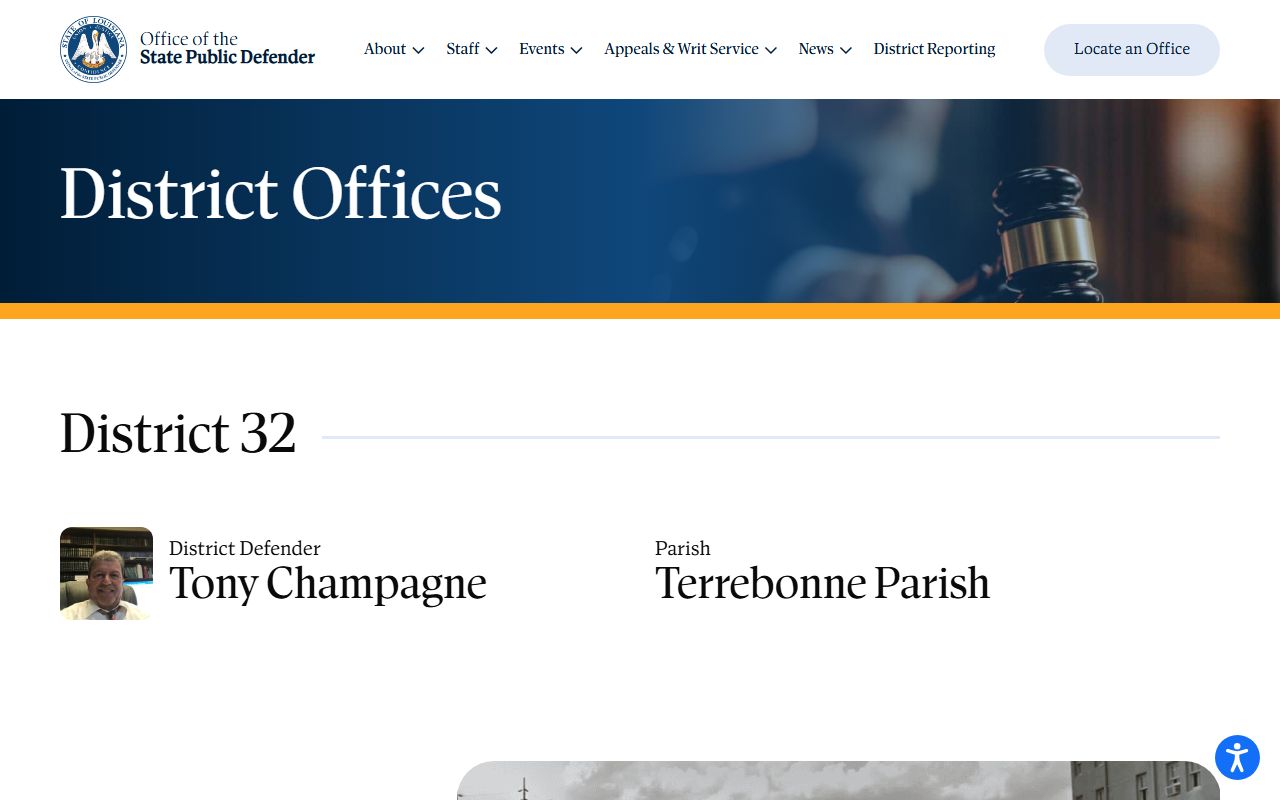
That office is relevant to criminal court records when a defendant needs appointed-counsel information, not when a user needs certified copies from the Clerk.
Restricted Terrebonne Parish Criminal Court Records
Juvenile delinquency records are not ordinary public criminal court records. Access is usually limited to parties, counsel, agencies, and others authorized by law or court order. Sealed and expunged records are hidden from ordinary public searches. Pending investigative and prosecutive materials can be restricted. Protected victim information, minor identifiers, medical or mental health details, Social Security numbers, and financial account numbers should be redacted from public copies.
Terrebonne Parish is also within federal court geography for the Eastern District of Louisiana, but federal criminal cases are not kept by the parish Clerk. The U.S. District Court for the Eastern District of Louisiana is a separate federal source assigned to this page.
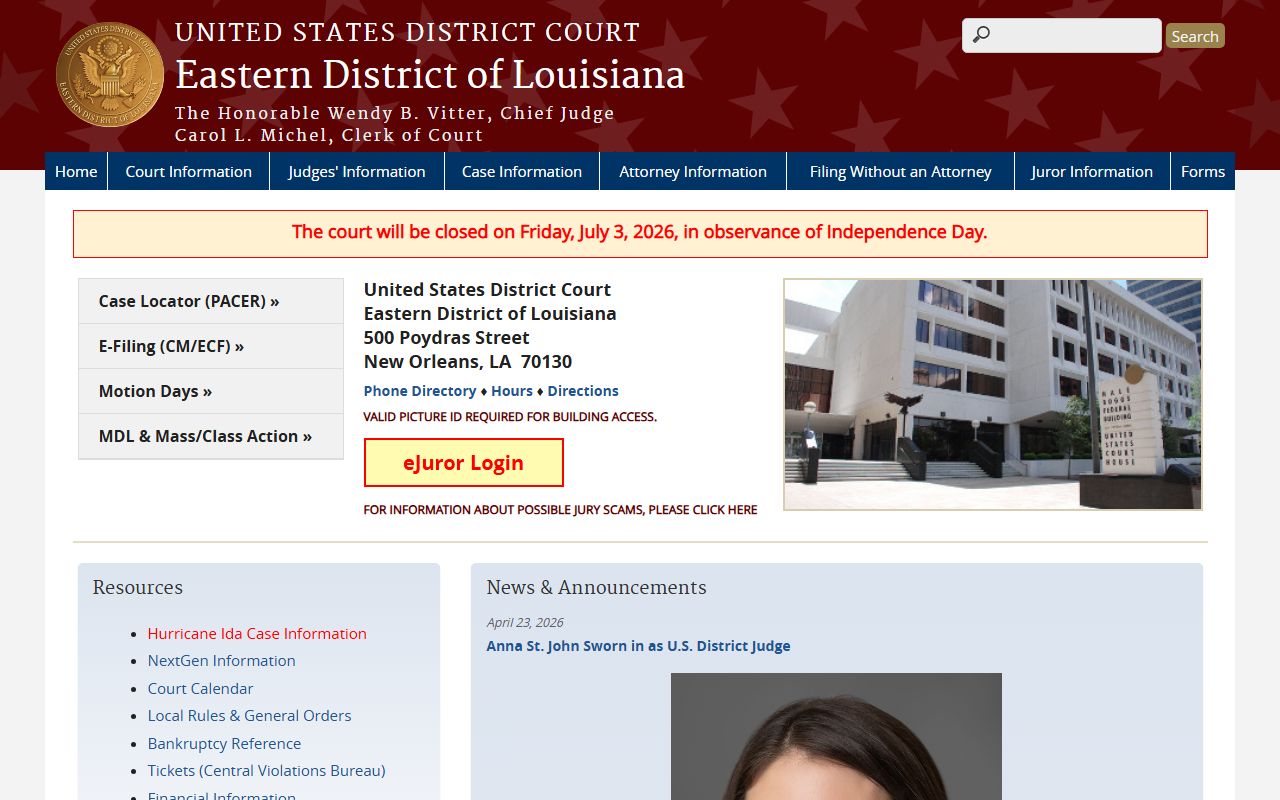
Use the federal court path only for federal criminal cases; state cases from Terrebonne Parish remain with the local and state court system.
Federal Criminal Court Context
Some criminal matters tied to Terrebonne Parish may be federal rather than state cases. Federal prosecutions in this region are handled outside the parish district-court file. That means a parish Clerk search may not show a federal indictment, federal plea, federal sentence, or federal appeal. Federal dockets generally route through federal court systems such as CM/ECF and PACER, while state 32nd JDC files route through the Terrebonne Parish Clerk.
The U.S. Attorney's Office for the Eastern District of Louisiana is the federal prosecution source assigned to this page.
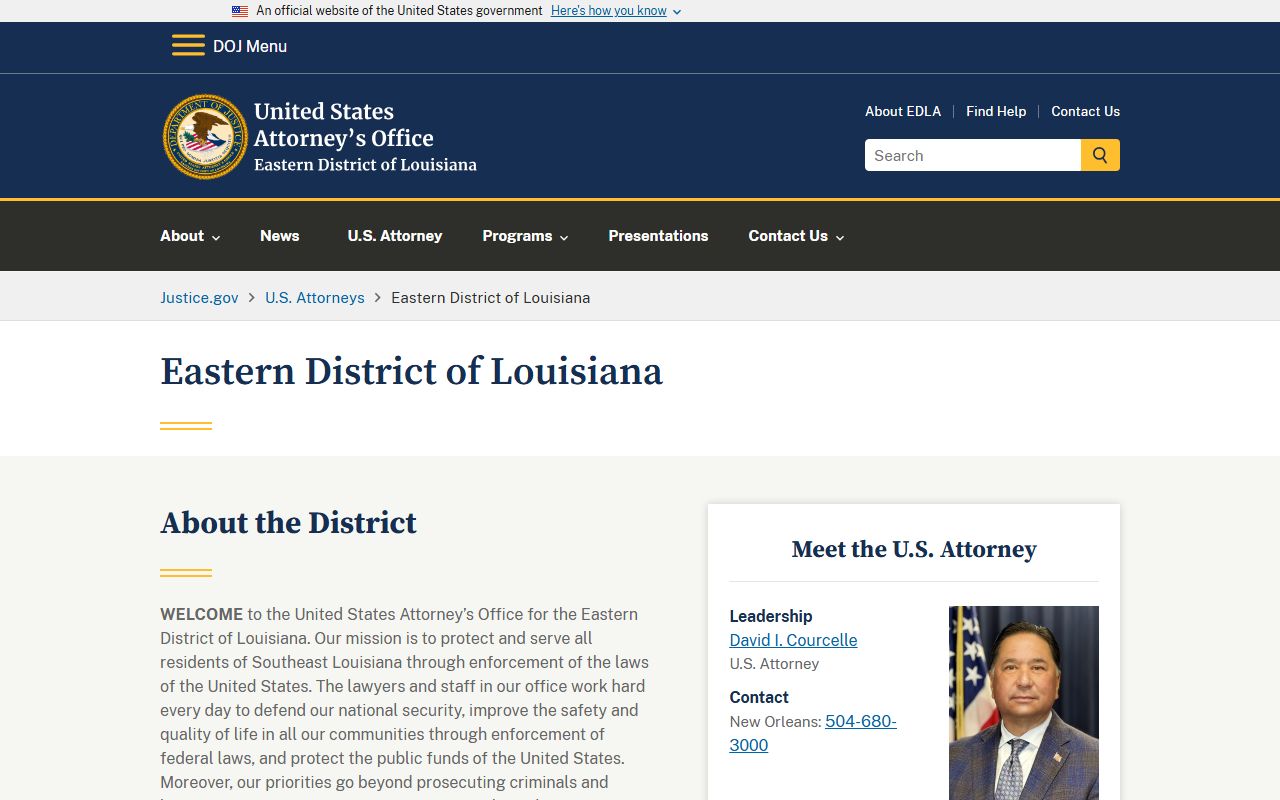
That distinction keeps local criminal court records, parish booking data, state prosecution, and federal prosecution in their correct lanes.